Workshop
Shift In: Making Your AI Coding Agent a Quality Engineer
Workshop
Shift In: Making Your AI Coding Agent a Quality Engineer
Workshop
Shift In:
Making Your AI Coding Agent a Quality Engineer
Summary
AI coding agents like GitHub Copilot and Claude Code already write, refactor, and test code at remarkable speed, and teams gain real value from them every day. The next step is bigger: making the agent a full participant in the team's quality engineering, so its speed comes with the confidence to match. Shift-left moved testing earlier in time. An agent compresses code, tests, and decisions into one continuous generative loop — which means quality can now travel inside that loop, with the agent, as it works.
That is Shift In. In small mobs around one machine, teams take a real, running repository — business context and SLIs already defined — from bare to a fully quality-engineered delivery pipeline using the agent at every step.
Through short, hands-on exercises we turn business context into the agent's instructions, run AI code review, generate trustworthy unit, API, and system tests, build a CI pipeline, run tests inside the agent's loop, and finish by building a complete feature with quality embedded throughout. We use Claude Code as the reference.
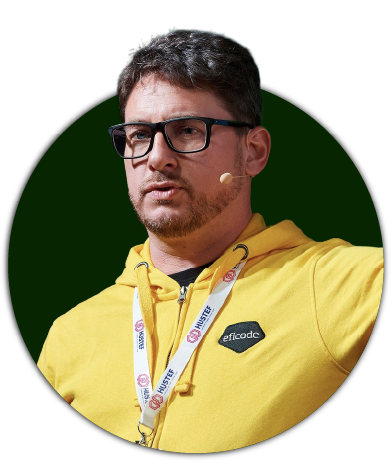
- Szilárd Széll
- English
- 26 October Full Day
- 9h30 - 17h00
- Lunch & Coffee Break Included
- VIP Executive Art's Hotel
Learning Objectives
You'll leave with a practical toolkit — instructions files, skills, subagents, hooks, and MCP — a mob-based verification ritual that keeps a human as the quality gate, and a concrete model of Shift In you can apply to your own codebase right after the tutorial.
Requirements
This workshop is open to professionals involved in software testing and quality assurance. While no formal prerequisites are required, participants will benefit the most if they have:
- Basic knowledge of software testing processes and quality assurance principles;
- Experience in test management, QA, or software development (recommended but not mandatory);
- A desire to assess and improve their organization's test maturity;
- An interest in structured frameworks like TMMi for process optimization.
Who Should Attend
No prior agent experience required. Comfort with Git and basic Python expected.
Summary
AI coding agents like GitHub Copilot and Claude Code already write, refactor, and test code at remarkable speed, and teams gain real value from them every day. The next step is bigger: making the agent a full participant in the team's quality engineering, so its speed comes with the confidence to match. Shift-left moved testing earlier in time. An agent compresses code, tests, and decisions into one continuous generative loop — which means quality can now travel inside that loop, with the agent, as it works.
That is Shift In. In small mobs around one machine, teams take a real, running repository — business context and SLIs already defined — from bare to a fully quality-engineered delivery pipeline using the agent at every step.
Through short, hands-on exercises we turn business context into the agent's instructions, run AI code review, generate trustworthy unit, API, and system tests, build a CI pipeline, run tests inside the agent's loop, and finish by building a complete feature with quality embedded throughout. We use Claude Code as the reference.
Learning Objectives
You'll leave with a practical toolkit — instructions files, skills, subagents, hooks, and MCP — a mob-based verification ritual that keeps a human as the quality gate, and a concrete model of Shift In you can apply to your own codebase right after the tutorial.
- Szilárd Széll
- English
- 26 October Full Day
- 9:30am - 5pm
- Lunch & Coffee Break Included
- VIP Executive Art's Hotel
Who Should Attend
No prior agent experience required. Comfort with Git and basic Python expected.
Requirements
This workshop is open to professionals involved in software testing and quality assurance. While no formal prerequisites are required, participants will benefit the most if they have:
- Basic knowledge of software testing processes and quality assurance principles;
- Experience in test management, QA, or software development (recommended but not mandatory);
- A desire to assess and improve their organization's test maturity;
- An interest in structured frameworks like TMMi for process optimization.
Summary
AI coding agents like GitHub Copilot and Claude Code already write, refactor, and test code at remarkable speed, and teams gain real value from them every day. The next step is bigger: making the agent a full participant in the team's quality engineering, so its speed comes with the confidence to match. Shift-left moved testing earlier in time. An agent compresses code, tests, and decisions into one continuous generative loop — which means quality can now travel inside that loop, with the agent, as it works.
That is Shift In. In small mobs around one machine, teams take a real, running repository — business context and SLIs already defined — from bare to a fully quality-engineered delivery pipeline using the agent at every step.
Through short, hands-on exercises we turn business context into the agent's instructions, run AI code review, generate trustworthy unit, API, and system tests, build a CI pipeline, run tests inside the agent's loop, and finish by building a complete feature with quality embedded throughout. We use Claude Code as the reference.
Who Should Attend
This workshop session is aimed at people interested in Risk and how it associates with negative testing and will be run at a basic level.
- Szilárd Széll
- English
- 26 October Full Day
- 9h30 - 17h00
- Lunch & Coffee Break Included
- VIP Executive Art's Hotel
Learning Objectives
You'll leave with a practical toolkit — instructions files, skills, subagents, hooks, and MCP — a mob-based verification ritual that keeps a human as the quality gate, and a concrete model of Shift In you can apply to your own codebase right after the tutorial.
Requirements
This workshop is open to professionals involved in software testing and quality assurance. While no formal prerequisites are required, participants will benefit the most if they have:
- Basic knowledge of software testing processes and quality assurance principles;
- Experience in test management, QA, or software development (recommended but not mandatory);
- A desire to assess and improve their organization's test maturity;
- An interest in structured frameworks like TMMi for process optimization.
Who Should Attend
No prior agent experience required. Comfort with Git and basic Python expected.
Who Should Attend
This workshop session is aimed at people interested in Risk and how it associates with negative testing and will be run at a basic level.
Learning Objectives
- Reflect on scenarios in which influencing is required to improve influencing behaviours;
- Establish what sources of power are available to you in your workplace;
- Use stakeholder mapping to identify the relationships between the person/people you are looking to persuade;
- Plan a deliberate approach to how you might persuade your person or people using sources of power, stakeholder mapping and shared problems.
Who Should Attend
The TMMi workshop is aimed at anyone that is involved in test process improvement, either at organizational or at project level.. This includes people in roles such as QA-lead, test managers, test consultants and (lead-)assessors. The TMMi workshop is appropriate for anyone who wants an understanding of the TMMi model.
Prices
PSTQB Associates
Non-PSTQB Associates
Early Bird
655,00€
15% OFF
693,00€
10% OFF
Normal
732,00€
5% OFF
770,00€
*The prices shown include VAT at the current legal rate (23%).
Early Bird deadline: September 25
Prices
PSTQB Associates
Non-PSTQB Associates
Normal
732,00€
5% OFF
770,00€
*The prices shown include VAT at the current legal rate (23%).
Early Bird Deadline: Expired
Prices
PSTQB Associates
Non-PSTQB Associates
Early Bird
655,00€
15% OFF
693,00€
10% OFF
Normal
732,00€
5% OFF
770,00€
*The prices shown include VAT at the current legal rate (23%).
Early Bird deadline: September 25
Prices
PSTQB Associates
Non-PSTQB Associates
Normal
732,00€
5% OFF
770,00€
*The prices shown include VAT at the current legal rate (23%).
Early Bird Deadline: Expired
Prices
Normal
PSTQB Associates
732,00€
5% OFF
Non-PSTQB Associates
770,00€
*The prices shown include VAT at the current legal rate (23%).
Early Bird Deadline: Expired
Prices
Early Bird
PSTQB Associates
655,00€
15% OFF
Non-PSTQB Associates
693,00€
10% OFF
Normal
PSTQB Associates
732,00€
5% OFF
Non-PSTQB Associates
770,00€
*The prices shown include VAT at the current legal rate (23%).
Prazo de Early Bird:
25 de Setembro
Prices
Normal
PSTQB Associates
732,00€
5% OFF
Non-PSTQB Associates
770,00€
*The prices shown include VAT at the current legal rate (23%).
Prazo de Early Bird:
Expirado